The Broken Kiosk in Broken Arrow: Lessons from a Small-Town Robot That Ended Up in Court
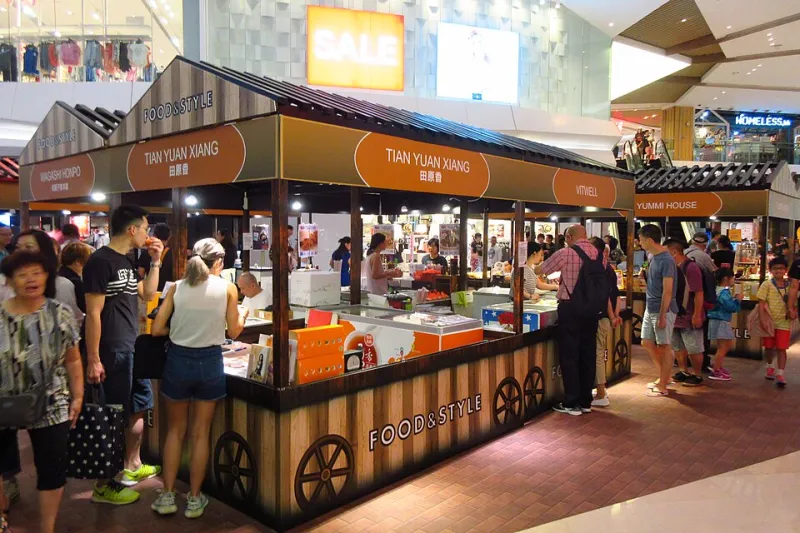
Photo: Luk YUE kUM GODNVWowi, CC BY-SA 4.0, via Wikimedia Commons
In the summer of 2022, a regional shopping center outside Tulsa deployed an interactive robotic concierge — a touchscreen-equipped kiosk on wheels that could greet shoppers, answer questions, and guide visitors to storefronts. Eighteen months later, the unit was unplugged, the vendor was facing a breach-of-contract claim, and the mall's marketing director had a story she now tells at retail conferences as a warning.
The technology worked, mostly. That was never the problem.
When the Demo Doesn't Match the Driveway
The vendor pitched the system the way immersive vendors always do: with a polished demo reel shot in a gleaming urban retail environment, full of diverse twenty-somethings who instinctively understood how to engage with a talking robot. The installation, by contrast, went into a single-level mall anchored by a department store and a Cato, serving a community where the median shopper was 49 years old and the busiest foot traffic came on senior discount day.
The disconnect was immediate and total.
Older shoppers didn't trust the robot and didn't know they could ignore it. Parents used it as a climbing structure. The voice interface, tuned to a generic accent profile, struggled with regional speech patterns. The touchscreen sat at a height that was technically ADA-compliant but practically unusable for anyone in a motorized wheelchair with limited reach. Within three months, the unit spent more time in a service closet than on the floor.
The litigation that followed centered on uptime guarantees and maintenance response times. But the underlying failure was a design failure — one the industry repeats weekly from Fresno to Scranton.
The Coastal Default
Immersive design has a default user, and that user lives in a coastal metro, earns well into six figures, and has probably owned at least one VR headset. Our portfolios reflect it. Our case studies reflect it. Our budgets reflect it.
Meanwhile, the actual center of gravity of American consumer spending sits somewhere else entirely. Middle America — the markets between the coasts that account for the majority of US retail square footage — experiences immersive technology differently, and the differences are not cosmetic.
Consider three assumptions that quietly sabotage mainstream deployments:
Assumption one: novelty is enough. In Austin or Seattle, a robotic concierge markets itself. In Broken Arrow, it needs to justify itself. Shoppers who have no prior relationship with gesture interfaces or voice assistants won't experiment for experimentation's sake. The experience must deliver immediate, legible value — wayfinding, a coupon, an answer — within the first ten seconds.
Assumption two: everyone has current hardware and unlimited patience. Cloud-rendered AR try-on experiences that run beautifully on a new iPhone choke on a four-year-old Android over rural broadband. If your experience requires a fast connection and a fast phone, you have quietly excluded a large share of the American interior.
Assumption three: failure is a software problem. When the Tulsa-area kiosk broke down, the nearest certified technician was a two-hour drive away. Support contracts priced for coastal density don't pencil in markets where a service call is a day trip. Immersive installations in these markets need hardware resilience and remote diagnostics designed in from the start, not bolted on after the first lawsuit.
Designing for Tulsa, Not Tokyo
The playbook for mainstream America is not a dumbed-down version of the coastal playbook. It is a different playbook, governed by different constraints:
- Design for the skeptic. Every immersive touchpoint should communicate its purpose without instruction. If a first-time user needs a tutorial, redesign the entry point.
- Build for the median device, not the launch device. Test on the phones people actually carry and the bandwidth they actually have.
- Treat accessibility as the baseline, not the accommodation. Fixed touchscreens, seated reach ranges, hearing-loop compatibility, and high-contrast interfaces serve seniors and disabled shoppers — who, in many mid-market communities, are the core customer base.
- Budget for the service call. A realistic total cost of ownership for a rural or suburban installation includes travel time, parts shipping, and downtime. If the economics only work at 99% uptime, they don't work.
- Partner locally. The installations that survive are the ones where a store manager down the hall can perform a restart. Empower the people who are actually there.
The Larger Stakes
There is a temptation to read stories like the Broken Arrow lawsuit as evidence that immersive technology is overhyped in the heartland. The opposite conclusion is more defensible. Mainstream consumers are not allergic to immersive experiences; they are allergic to experiences designed without them in mind. The malls, dealerships, and regional retailers of Middle America represent the single largest untapped market for well-executed interactive design — and the brands that solve for Tulsa first will find that the lessons travel everywhere.
The $2 smell test in our headline is literal: at one point during the dispute, the kiosk's promotional scent diffuser was still running, filling a corner of the mall with a synthetic fragrance nobody had asked for, while the screen above it displayed an error message. It is a reasonably good metaphor. Before we ship the spectacle, we might spend two dollars confirming the fundamentals — does it work here, for these people, today?
Immersive design's next frontier is not a bigger headset or a faster render engine. It is the discipline of designing for the whole country, not just the parts of it that already believe.