Feeling the Digital: How Haptic Feedback Is Closing the Sensory Gap in Immersive Design
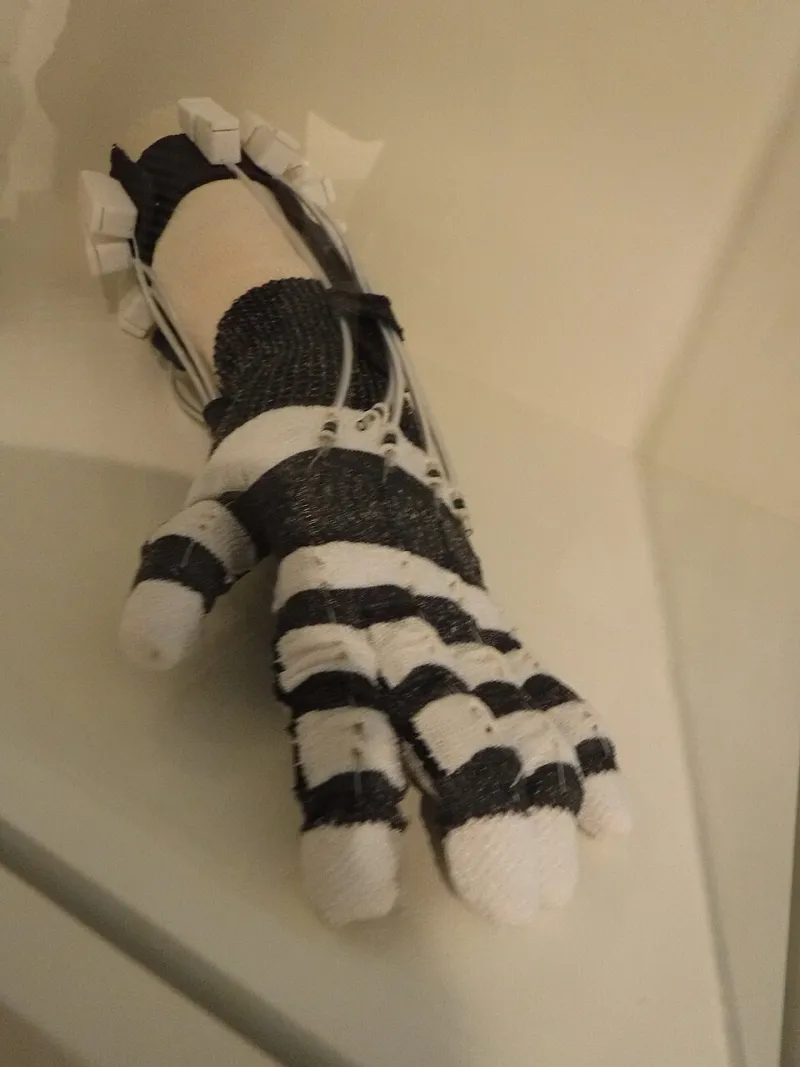
Photo: Mary Mark Ockerbloom, CC BY-SA 3.0, via Wikimedia Commons
Design has long operated under a quiet assumption: that a screen's pixels and a speaker's waveforms are sufficient to create meaningful engagement. For a generation of users raised on touchscreens, that assumption has begun to feel not just incomplete, but increasingly limiting. As immersive design matures—moving from flat interfaces into spatial, three-dimensional environments—the absence of tactile information becomes not a minor omission but a fundamental design failure.
Haptic technology, which generates physical sensations through vibration, pressure, and motion feedback, is positioning itself as the missing sensory layer. The question for design strategists is no longer whether haptics belong in the immersive experience stack. The more pressing question is how to integrate them meaningfully, and what constraints must first be overcome.
Beyond the Buzz: What Modern Haptics Actually Deliver
Early haptic implementations were rudimentary at best. The vibrating alert on a pager or the rumble motor in a first-generation game controller offered crude approximations of physical sensation. Contemporary haptic systems operate in an entirely different register. Actuator technologies such as linear resonant actuators (LRAs) and piezoelectric systems can now reproduce textures, simulate resistance, and mimic the sensation of pressing a physical button—all through a flat glass surface or a wearable device.
Apple's Taptic Engine, integrated throughout its product line, demonstrated to the consumer market that haptic feedback could feel precise and intentional rather than generic and disruptive. More advanced implementations, such as those developed by Immersion Corporation and HaptX, extend this logic into gloves and full-hand peripherals capable of simulating grip, weight, and surface texture with remarkable fidelity.
For immersive design professionals, this progression represents a fundamental expansion of the sensory palette. A VR environment that allows a user to feel the grain of a wooden surface or the resistance of a virtual door handle is not simply more entertaining—it is neurologically more convincing. Research in multisensory integration consistently shows that tactile confirmation accelerates cognitive processing and deepens the perception of presence.
Real-World Applications Across Key Verticals
Gaming and Entertainment
The gaming industry has served as the primary commercial proving ground for haptic innovation. Sony's PlayStation 5 DualSense controller introduced adaptive triggers and high-fidelity haptic feedback to a mass audience, allowing players to feel the tension of drawing a bowstring or the resistance of driving through mud. These are not cosmetic additions—they change how players interpret and respond to in-game events, contributing to deeper immersion and longer engagement sessions.
Beyond console gaming, location-based entertainment venues across the United States are deploying haptic suits and vests that synchronize physical sensations with VR narrative experiences. Companies such as bHaptics have developed full-torso wearables that allow theme park visitors and training facility participants to feel impacts, environmental effects, and directional cues—transforming passive observation into physical participation.
E-Commerce and Retail
One of the most commercially significant frontiers for haptic design lies in retail. The inability to physically evaluate a product remains the most persistent friction point in online purchasing, particularly for categories such as apparel, furniture, and consumer electronics. Haptic interfaces capable of simulating material textures—the softness of a cashmere sweater or the cool weight of a stainless steel appliance—could fundamentally alter conversion rates and reduce return volumes.
Several research initiatives, including projects at MIT's Media Lab and Stanford's Human-Computer Interaction Group, have demonstrated prototype systems capable of transmitting surface texture data through specialized displays. While mainstream deployment remains years away, forward-thinking brands are already engaging with these technologies in pilot environments to understand their potential impact on the digital shopping journey.
Enterprise and Training Applications
Perhaps the most immediately viable application space for sophisticated haptics is professional training. Medical simulation platforms developed by companies such as 3D Systems and Fundamental Surgery use haptic feedback to teach surgical techniques, allowing trainees to develop muscle memory for procedures without patient risk. The U.S. military and major aerospace contractors have similarly integrated haptic systems into maintenance and operational training programs, reducing both training time and error rates.
For enterprise design teams building internal tools and training environments, haptics offer the opportunity to create procedural learning experiences that are both safer and more transferable than traditional methods. The investment calculus is particularly compelling in high-stakes industries where the cost of on-the-job error is measured in human safety or regulatory liability.
The Design Challenges That Remain
Despite its promise, haptic technology faces a set of genuine constraints that responsible design strategists must acknowledge. Hardware fragmentation is among the most significant. Unlike visual and audio outputs, which benefit from decades of standardization across devices and platforms, haptic actuators vary widely in capability, latency, and resolution. Designing a haptic experience that functions consistently across a consumer's smartphone, a VR headset, and a wearable peripheral requires either significant abstraction or platform-specific development investment.
Cost remains another limiting factor. High-fidelity haptic systems—particularly gloves and full-body wearables capable of nuanced sensation—carry price points that restrict them to enterprise and research contexts. Consumer-grade haptic peripherals have improved substantially, but the gap between what a $50 controller can deliver and what a $5,000 research glove provides remains substantial.
There is also the question of design literacy. Most UX and interaction designers working in the United States today received little or no formal training in haptic design principles. Creating tactile experiences that feel intuitive rather than disorienting requires a new set of competencies—an understanding of psychophysics, actuator behavior, and the cognitive expectations users bring to physical interaction. The industry will need to develop both educational frameworks and shared design standards before haptic integration becomes a routine element of the immersive design workflow.
The Strategic Imperative
For brands and design teams committed to building genuinely immersive digital experiences, haptics represent a strategic differentiator that is currently undervalued. The competitive landscape for visual and audio design is intensely saturated. The tactile dimension, by contrast, remains largely unclaimed.
The organizations that invest now in haptic literacy—building internal expertise, engaging with hardware partners, and incorporating tactile feedback into their design systems—will be positioned to deliver experiences that competitors simply cannot replicate through visual refinement alone. The sensory gap in digital design is real, and the tools to close it are increasingly available. The remaining variable is the willingness to treat touch not as a feature enhancement, but as a foundational design responsibility.