The Body Doesn't Lie: How Motion Capture Is Rewriting the Rules of Consumer Insight
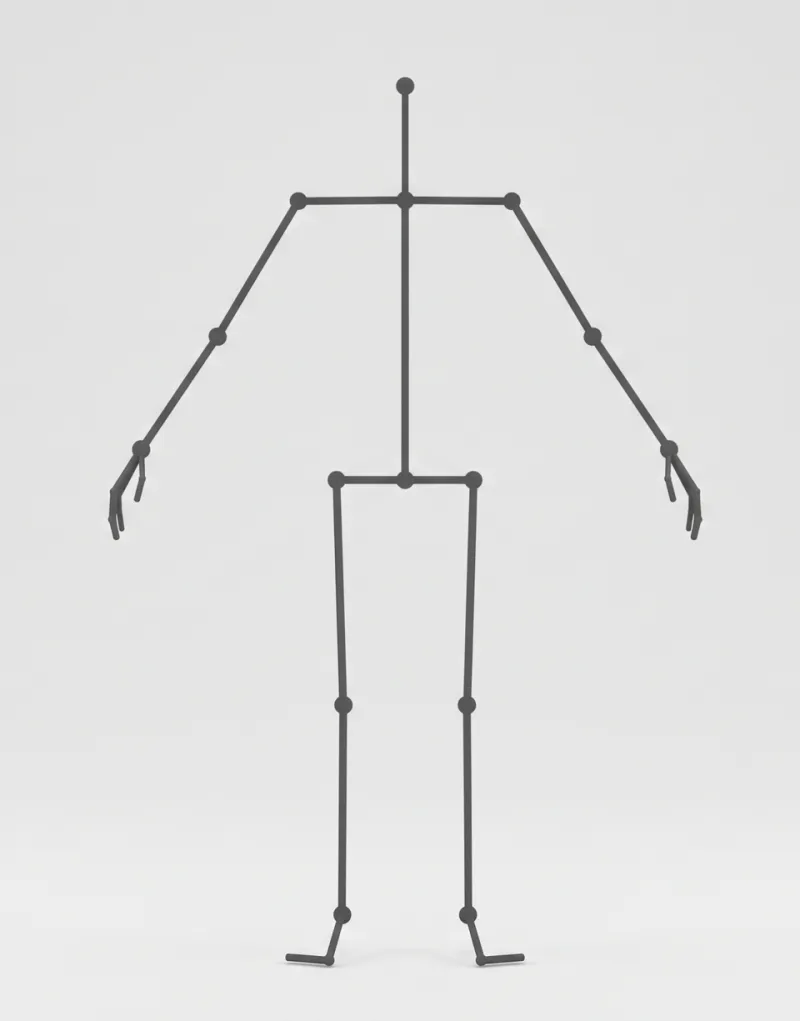
Photo: Gemini, Public domain, via Wikimedia Commons
For most of the history of consumer research, the industry has operated on an uncomfortable assumption: that what people say about their own behavior is a reliable proxy for what they actually do. Survey responses, focus group transcripts, and self-reported preference data have formed the empirical backbone of product development, marketing strategy, and experience design for decades. The problem is that human beings are notoriously poor observers of their own decision-making. They rationalize, they perform, they construct post-hoc narratives that satisfy the social expectations of the research environment. The data they produce is not dishonest, exactly. It is simply incomplete.
Motion capture technology, now increasingly integrated into immersive research environments, offers a fundamentally different kind of evidence. When a user navigates a virtual retail environment, their body records a continuous stream of behavioral data that no survey instrument can approximate: where their gaze lingers, how their posture shifts when they encounter unfamiliar information, which pathways they choose without conscious deliberation, and how their movement patterns change when cognitive load increases. This is not self-reported behavior. It is behavior itself.
The Limits of Flat-Screen Testing
Traditional usability testing—conducted on desktop or mobile interfaces, typically in a controlled lab environment—has generated enormous value for digital product teams over the past three decades. Its limitations, however, are structural rather than incidental.
Flat-screen environments constrain the range of behaviors available to a participant. A user clicking through a two-dimensional interface engages a narrow band of physical and cognitive response. The proprioceptive, vestibular, and spatial processing systems that govern how people actually navigate and make decisions in three-dimensional environments remain largely dormant. The result is research data that captures a subset of the human experience of a product or environment—often the subset least representative of how users will behave when the stakes are real and the environment is physical.
Immersive testing environments change this equation materially. When participants engage with a VR-rendered retail space, a virtual product demonstration, or an AR-enhanced service interaction, they bring their full embodied selves to the experience. They reach for objects. They step back when they feel crowded. They orient themselves using the same spatial heuristics they apply in physical environments. The behavioral data this generates is richer, more granular, and more ecologically valid than anything a click-through test can produce.
What Motion Capture Adds to the Research Stack
Motion capture—historically the domain of film production and video game development—has undergone significant democratization over the past several years. Marker-based systems, once requiring elaborate studio infrastructure, have been supplemented by markerless solutions that use depth-sensing cameras and computer vision algorithms to reconstruct body position and movement in real time. Several US-based research technology companies now offer turnkey motion capture integrations designed specifically for immersive consumer research applications.
The data these systems generate falls into several analytically distinct categories, each of which addresses a different dimension of consumer behavior.
Spatial navigation data—the paths users take through a virtual environment, their dwell patterns, the areas they avoid—provides a behavioral map of attention and preference that complements and frequently contradicts self-reported responses. In one well-documented application, a major US grocery chain used VR store simulations with embedded motion tracking to evaluate proposed aisle configurations. Participants consistently reported satisfaction with layouts that their movement data revealed they found confusing: they spent longer in certain zones, exhibited more backtracking behavior, and displayed elevated hesitation patterns in areas they subsequently described as intuitive. The motion data told a more accurate story.
Gesture and reach data offers a parallel channel of insight for product and packaging design. When users interact with virtual product representations, their reaching behavior—the velocity and trajectory of approach, the handling patterns they adopt, the frequency with which they pick up and set down objects—encodes preference information that verbal response cannot capture with equivalent precision.
Posture and proxemic data, tracking how users position their bodies relative to virtual elements and other participants in shared immersive environments, provides insight into emotional and cognitive states that are rarely accessible through self-report. Research in affective computing has established reliable correlations between postural cues—forward lean, shoulder orientation, weight distribution—and engagement states including interest, discomfort, and cognitive overload. In an immersive research context, these signals become part of the analytical dataset.
Forward-Thinking Brands Leading the Shift
Several categories of US brand are moving aggressively into motion-capture-enabled consumer research, driven by the specific insight gaps their existing methodologies cannot address.
Automotive manufacturers, long reliant on physical prototype clinics that are expensive to execute and limited in the variation they can accommodate, are using VR environments with full body tracking to evaluate interior ergonomics, infotainment interface design, and driver experience across vehicle configurations that do not yet exist in physical form. The ability to test embodied user behavior against virtual prototypes—and to iterate rapidly based on motion data rather than waiting for physical prototype cycles—is compressing development timelines significantly.
Retail and consumer goods companies are applying similar logic to store design, product placement, and packaging research. The VR simulation approach, augmented by motion capture, allows brands to test environmental configurations with hundreds of participants in the time it would take to execute a single physical prototype evaluation.
Healthcare organizations are exploring motion-capture-enabled research for patient experience design, using immersive simulations of clinical environments to identify the spatial and behavioral factors that contribute to patient anxiety and disorientation—data that informs facility design decisions with direct implications for patient outcomes.
Privacy, Ethics, and the Embodied Data Problem
The analytical power of motion-captured behavioral data creates a set of ethical obligations that agencies and brands operating in this space cannot afford to treat as secondary considerations.
Embodied behavioral data is, by its nature, more intimate than click-stream data or survey response. It captures physical and potentially emotional states that participants may not be consciously aware of disclosing. The regulatory landscape governing biometric data collection in the United States is currently fragmented—Illinois, Texas, and Washington maintain biometric privacy statutes with meaningful teeth, while federal-level protection remains underdeveloped—but the direction of travel is clearly toward greater restriction and accountability.
Practical ethical frameworks for immersive consumer research need to address several specific requirements. Informed consent processes must communicate clearly what categories of data are being collected, including the behavioral and physiological dimensions that go beyond conventional survey participation. Data minimization principles—collecting only the behavioral signals analytically necessary for the research objectives—should govern system configuration. Retention policies for embodied data warrant more conservative treatment than conventional research data, given the potential for re-identification and the sensitivity of the information involved.
Agencies that treat these obligations as integral to their research design, rather than as compliance burdens to be managed at the margins, will be better positioned to build the participant trust that high-quality immersive research requires.
The Insight Advantage Is Already Compounding
The brands and agencies that move earliest and most deliberately into motion-capture-enabled consumer research are not simply acquiring a new data channel. They are building an institutional capacity to understand human behavior at a level of resolution that traditional methodologies cannot approach. The gap between what that capacity reveals and what survey-based research can produce is not incremental. It is categorical.
As immersive environments become an increasingly central feature of how Americans shop, learn, receive healthcare, and engage with entertainment, the ability to understand embodied behavior in those environments will shift from a competitive advantage to a baseline competency. The research infrastructure being built today will determine which organizations are equipped to operate effectively in that landscape.