Waiting Is the Experience: Throughput, Patience, and the Real Math of Immersive Venues
Photo: Michael Coghlan from Adelaide, Australia, CC BY-SA 2.0, via Wikimedia Commons
There is a moment in every capital review for a location-based immersive attraction when someone asks about the guest experience and someone else asks about capacity. The two conversations usually proceed in parallel and never meet. That separation is expensive, because in this category the capacity number and the experience number are the same number wearing different clothes.
The Metric That Governs Everything
Throughput—guests processed per hour—sets revenue ceiling, staffing model, and break-even point simultaneously. A walkthrough attraction with a fifteen-minute show and a load cycle of three minutes cannot process more than roughly a hundred guests per hour per channel, no matter how good the content is. Multiply by ticket price and operating hours and the arithmetic is unforgiving, particularly in US markets where commercial rent in a desirable urban district runs high enough that the lease consumes a substantial share of gross revenue.
The industry's usual response is to raise ticket price or extend operating hours. Neither scales. The lever that actually moves is the relationship between experience duration, group size, and the gap between groups—and that relationship is decided at the design stage, months before anyone builds a ticket page.
The Pre-Show as Load-Leveling Infrastructure
Theme parks solved this problem decades ago and the solution is embedded in their buildings, mostly unnoticed. A staged pre-show is not decoration; it is a buffer. It absorbs the first four to six minutes of a guest's wait inside an environment that feels like part of the attraction, which serves two purposes at once: it removes impatient bodies from the physical queue and it converts dead time into narrative time.
The best-known examples in the US market—the stretching room before a certain haunted manor, the laboratory sequence before a flying theater—are engineering solutions disguised as storytelling. They compress the perceived wait, they synchronize a large group into a single dispatch unit, and they give the operations team a controlled reset window between batches.
Brand pop-ups almost never build this. They build a room with a headset and a rope line in a hallway, then wonder why guests who waited forty minutes describe the experience as underwhelming. The memory of an attraction is heavily weighted toward its worst segment.
Why Patience Degrades Before It Runs Out
Queue research from the service industries converges on a handful of findings that translate directly into immersive design. Unoccupied waiting feels longer than occupied waiting. Uncertain waits feel longer than certain ones, which is why a posted estimate that holds is worth more than one that is optimistically short. Waiting in an environment where you can see the thing you are waiting for—but cannot reach it—feels longer than waiting out of sight of it. And waits perceived as unfair feel longer than waits perceived as merely long.
The practical threshold that operators talk about informally sits around fourteen minutes. Below it, most guests tolerate the wait and the mood on entry stays positive. Past it, the arithmetic of patience starts requiring justification, and the experience on the other side has to be genuinely good to earn back the deficit. Fourteen minutes is not a law of nature, but it is a useful design constraint: it suggests how long a group can stand in an unordered line before the venue owes them something to do.
The Fairness Variable
US audiences have become acutely sensitive to queue fairness, largely because the past decade normalized paid line-skipping across travel, dining, and theme parks. The revenue is real, and for many operators priority access is the difference between a viable and marginal unit. But resentment compounds. A guest who paid for a standard ticket and watches a steady stream of higher-tier guests pass them does not experience a shorter wait; they experience a longer one with a narrative attached.
The mitigation is not to abandon tiered pricing but to design the physical queue so that the disparity is less visible, and to make the standard queue itself engaging enough that it registers as part of the product. Single-rider channels, which fill seats that would otherwise go empty, achieve the same throughput gain with far less perceived inequity—guests who choose them have accepted a different trade.
Notes for Pop-Ups and Brand Activations
Staffed brand activations face the same physics at smaller scale, and the mistakes are more common because the teams running them are marketers rather than operators.
First, timed entry is almost always better than an open line, even when it reduces headline attendance. A queue that never exceeds twelve minutes produces better sentiment data, better content capture, and a better ratio of completions to starts.
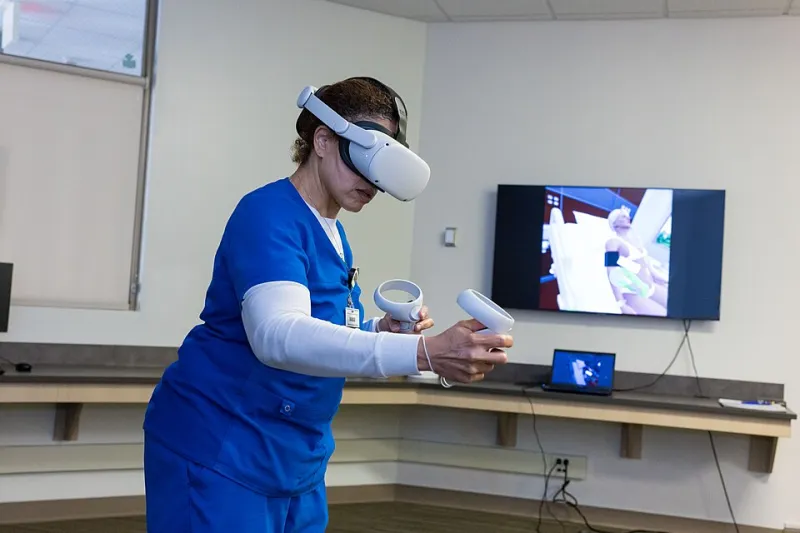
Second, seat density should be set by the load cycle, not by the floor plan. An extra four headsets that add two minutes to each cycle can reduce hourly throughput outright.
Third, the exit path is a revenue surface. Most location-based venues route guests through a retail or photo moment, and the conversion rate depends almost entirely on whether the guest is still inside the narrative when they arrive there. A rushed exit converts poorly.
Fourth, instrument the queue. Time-stamp entry, dispatch, and exit. The resulting distribution will nearly always show a bottleneck that is not the one the team assumed.
Designing the Wait, Deliberately
The uncomfortable conclusion for an industry that markets itself on spectacle is that the headset is rarely the constraint. The building is. Studios that will thrive in the next cycle are the ones that can hold a capacity model and a narrative model in the same conversation, and that treat the queue, the pre-show, and the dispatch bay as authored spaces rather than leftover square footage.
Guests forgive a lot. They will forgive modest visual fidelity and a slightly awkward calibration. What they will not forgive is standing in a hallway for half an hour with nothing to look at, watching other people walk past them, wondering whether the thing at the end could possibly be worth it. That question is answerable at the design table, and it should be answered there.